


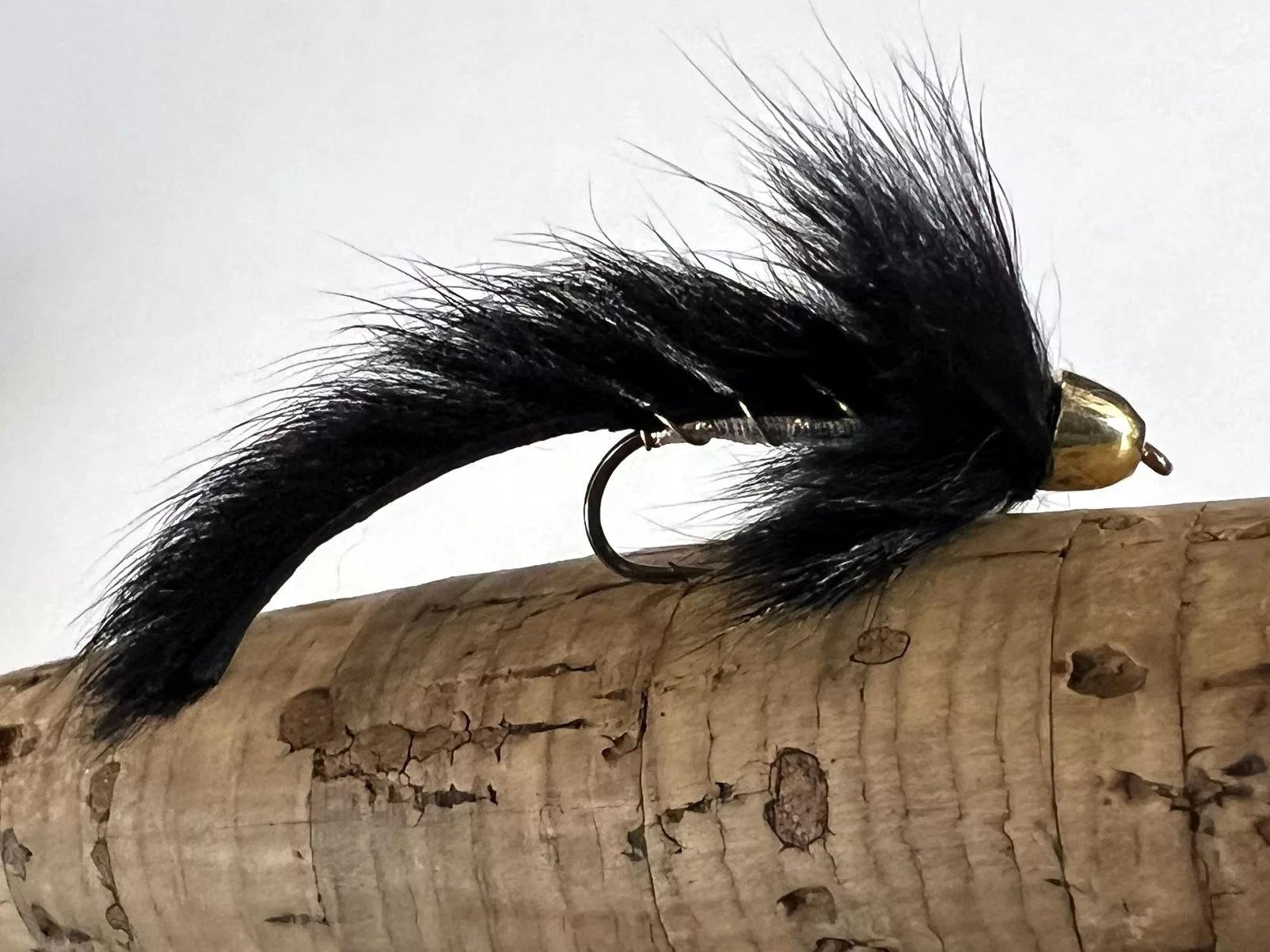
The slumpbuster is a go-to streamer pattern that gives fish a big target to hit. Simonson Photo
By Nick Simonson
For a big, meaty, chuck-and-duck kind of fly that sets off huge trout and elicits vicious strikes from smallmouth bass, the slumpbuster lives up to its name. When water is high and dingy, or when fish are looking for a mouthful, this fully customizable squirrel-based streamer is all but guaranteed to connect with fish. So, follow this tutorial and change things up as confidence colors in your favorite waters dictate to find fast action all open water season.
MATERIALS:
Hook: Streamer 3XL, Size 6-12
Thread: Black 6/0
Head: Brass Conehead
Underbody: Krystal Flash Strands, Wrapped
Tail & Overbody: Squirrel Zonker Strip
Ribbing: Medium Wire
Start the slumpbuster by placing a brass conehead next to the hook eye, and add a few wraps of .02 lead wire to the shank. Once secured and tightly wrapped, slide the lead up into the concave portion of the cone, so it holds it tight against the hook eye. From there, secure it all into place with some thread wraps down to the bend (1). At that point, tie in a strand of medium gold wire hanging off the bend (2). Then, select your underbody of choice, here it’s a few strands of krystal flash, but any material can be used from yarn, to microchenille, to estaz, so use what you have or get creative (3).

Wrap in the underbody material from the bend of the hook on up to the area just behind the cone head and secure it with a few thread wraps, trimming off the excess (4). At that point, strip the fur off the end of a squirrel zonker strip and tie in the bare tab of the strip just behind the cone (5). Using the wire which is still hanging off the back of the hook shank, gently wrap it through the strip to secure it to the top of the hook with wide, even wraps. When it reaches the tie-in point for the strip behind the cone head, secure it with a number of thread wraps and a drop of epoxy to hold it in place (6).
For the collar of the fly, tie in another squirrel strip, again stripping the fibers from one portion and tucking that up into the cone and securing with a number of thread wraps over the tab, back to the hair of the first strip (7). Tightly wrap the squirrel strip forward around the hook shank, gently stroking the fibers back toward the tail of the fly as you do. You should be able to get at least three wraps to form a solid collar. Once all is in place, whip finish behind the cone five or six times for a secure ending (8).
Beyond being a great leech or dark baitfish imitator, this fly can be tied up in a variety of ways with a number of accents depending on underbody material, wiring, and cone or squirrel strip color. Try a selection of sizes and hues to find the perfect pattern that offers up a sizeable seasonal snack to fish in your waters and busts any slump you might find yourself in!