


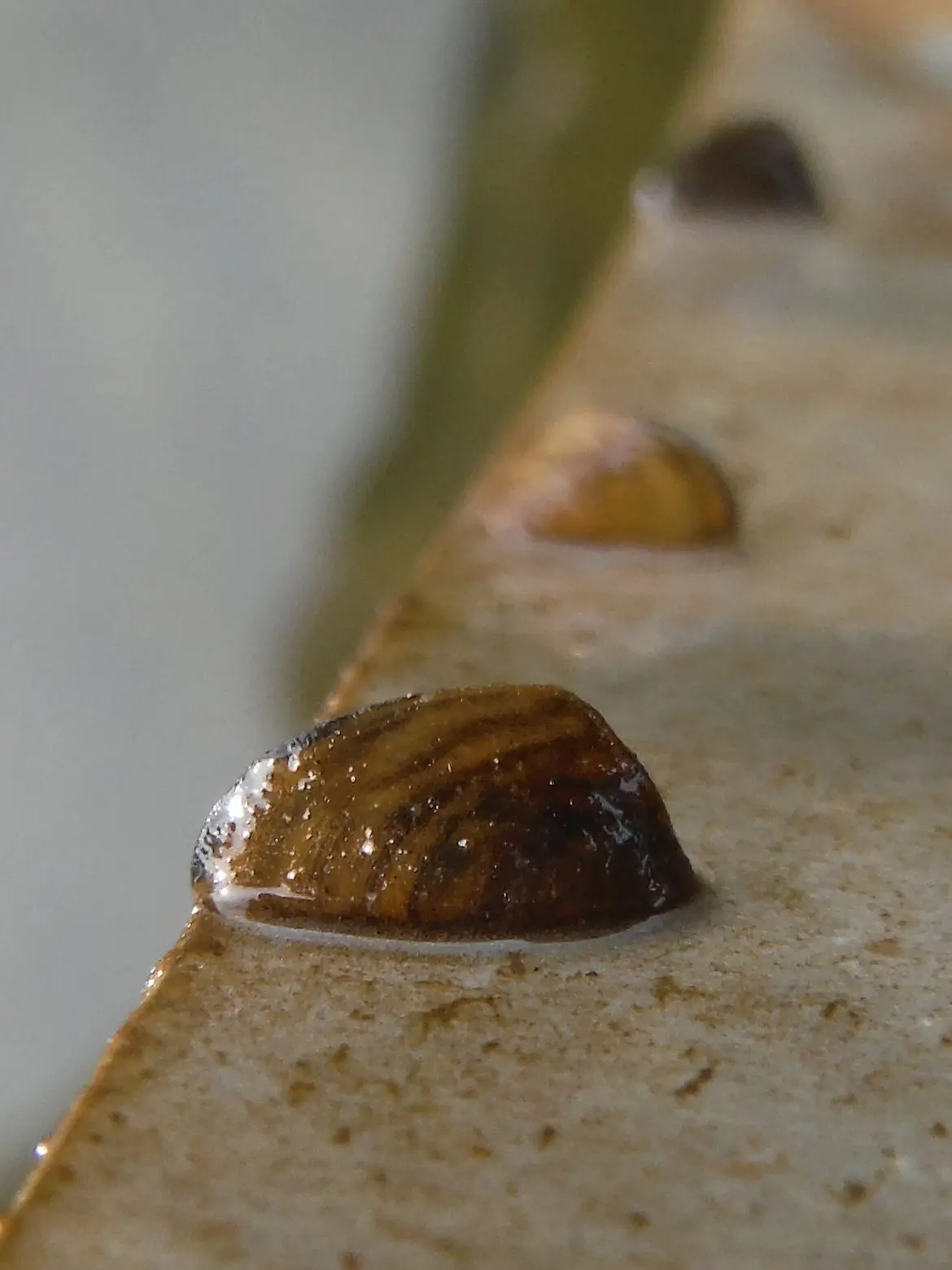
ANS such as zebra mussels remain a top focus of the NDG&F management plan, as the species can quickly and drastically alter a lake’s composition and impact water intake equipment, dams and other vital infrastructure. Simonson Photo
By Nick Simonson
On the rapidly shifting front lines in the battle to protect the state’s waters from aquatic nuisance species (ANS) such as zebra mussels, curly leaf pondweed and Eurasian watermilfoil, the North Dakota Game & Fish Department (NDG&F) not only seeks boaters’ vigilance at the launches on various lakes and rivers, but also their input into the agency’s draft ANS management plan. As part of the process of updating the ANS management plan to more accurately reflect the changing demands and areas of concern in the state, the public is encouraged to check out the comprehensive program for preventing the spread of those species and others from out-of-state infested waters, and those where they are present in Roughrider Country, according to NDG&F ANS Supervisor Ben Holen.
[[Quote]] “We’ve been working on this management plan for the past couple of years. Our original management plan was passed in 2002 and we redid it in 2018. Then in 2023 we decided that we need to update some of the prioritizations for action. We need to update some species accounts and we feel like we can do more about writing it and giving the reader context about pathways here in North Dakota,” Holen states.
The management plan provides detailed dossiers on ANS species of greatest concern and the tactics the agency and watercraft users can employ to educate the public and prevent further infestations. The growing documentation of impacts caused by ANS increases with each passing year, as notable changes to fisheries caused by invasive carp species and mollusks such as the zebra mussel evidence waters in decline and forever altered by the presence of these aquatic flora and fauna. So far this summer, heightened vigilance at boat launches by NDG&F employees and from survey teams show limited advancements of ANS and detections have helped stop infested vessels from entering those waters.
“We found some curly leaf pondweed that was a new detection down in Horseshoe Lake, and it’s not a huge surprise as Lake Elsie has curly leaf pondweed right down the road,” Holen states to the only new detection this summer, adding, “inspection crews are out there, working hard checking boats. We have found a few boats that have been fouled with zebra mussels and we’ve hot water decontaminated those around the state. Overall, it’s been a busy summer and hopefully it remains relatively quiet in the ANS realm.”
The NDG&F will continue its efforts from the summer, where extra seasonal staff was hired to inspect boats at high-traffic launches and those on infested waters, and continue that trend into the fall. Recently, the agency posted new jobs for autumn to appeal to students returning to college and help them get a foot in the door with the agency, especially if they’re pursuing future careers in fish and game management. Those interested can apply at gf.nd.gov/jobs.
The draft NDG&F ANS management plan is available for viewing at: gf.nd.gov/ans/management-plan and public comments can be left online for staff to consider through Aug. 15 before the documented is finalized and implemented by the agency.
Simonson is the lead writer and editor of Dakota Edge Outdoors.