


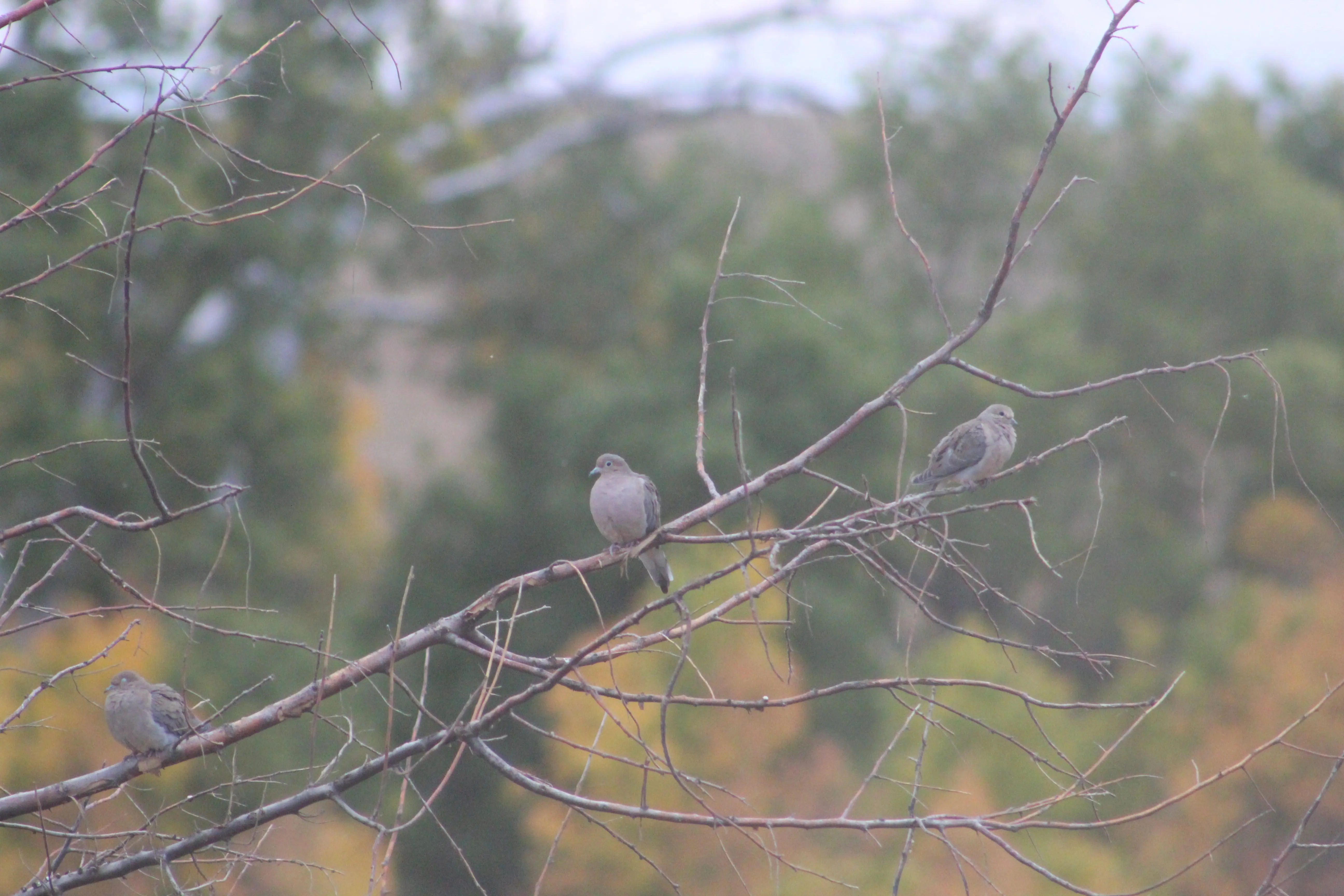
Mourning doves will rest during the day in roosting areas but will seek out their favorite food sources in the form of small grains just after sunrise and before sunset in late summer and early fall. The federally set mourning dove season typically begins on Sept. 1.
By Nick Simonson
August provides ample opportunities to scout things out for the mourning dove season which traditionally begins on Sept. 1 each year. What’s more, the month gives hunters the added advantage of identifying the small grain fields that attract these migratory upland birds and provides them with the inkling of how things can be set up best for those September hunts. By focusing on three key food items and putting the puzzle surrounding them together, more success for these fun and fast flying birds can be had.
You Can Do It!
Canola at this time of year is beginning to approach its harvest point. Leading up to that, these fields of bright yellow flowers with tiny black seeds stand out against a backdrop of green corn and soybean fields which comprise most of the agricultural landscape. Identifying the location of canola fields in a dove hunting area or near favorite set up spots is a huge win for dove hunters, as the tiny seeds which are harvested by humans for both oil and protein meal are a preferred food source for mourning doves heading into late summer, as they are easily consumed due their small size and are rich in calories and nutrients. While most canola fields should be harvested ahead of the September opener, the fields still draw birds as the scattered tiny seeds remain on the ground for a couple of weeks after the field has come down.
Where’s the Wheat
While North Dakota and much of the upper Midwest was known as the breadbasket of the country fifty years ago due to the massive amounts of wheat produced on the northern plains, that has shifted some with the development of hardier and more productive strains of corn and soybeans which are now planted. Nevertheless, enough wheat production exists in the region for hunters to locate and take note of these uncommon fields which draw doves in each fall. Typically this small grain falls from late August into September, and when a field is harvested, the leftover kernels are a major draw for mourning doves. Setting up along a waterhole adjacent to a cut wheat field is perhaps one of the best places to be on a humid late summer night after the dove season has opened, as doves will find both hydration and food all in one area.
Keep on the Sunny Side
It’s tough to miss a field of sunflowers this time of year, as those yellow-and-brown heads turn with the sun’s rays during the day. When all the canola and wheat is gone, sunflower fields remain a draw for doves, as setting up on the edge of one will help hunters connect with the resident mourning doves that remain in the latter part of the season and those that are passing through from northern reaches as part of their migration. Watch as the seeds on the flower heads develop and things turn brown and stiff in these fields in late September, and make a nearby spread of dove decoys to connect with birds coming in and out of the fields on their feeding routes.
By identifying these varieties of small grain fields now, hunters are more likely to connect with doves more frequently when late summer and early autumn arrive in the region. Note the field locations on a hunting map, and if needed, make contact with nearby landowners to secure access to those prime spots ahead of the season’s start. When it comes down to it, canola, wheat and sunflowers are choice food sources for doves. Identifying water sources, roosting areas, and grit deposits nearby such as gravel roads, puts all four pieces of the puzzle in play, and better hunting will be had once the season starts.
Simonson is the editor and lead writer for Dakota Edge Outdoors.