


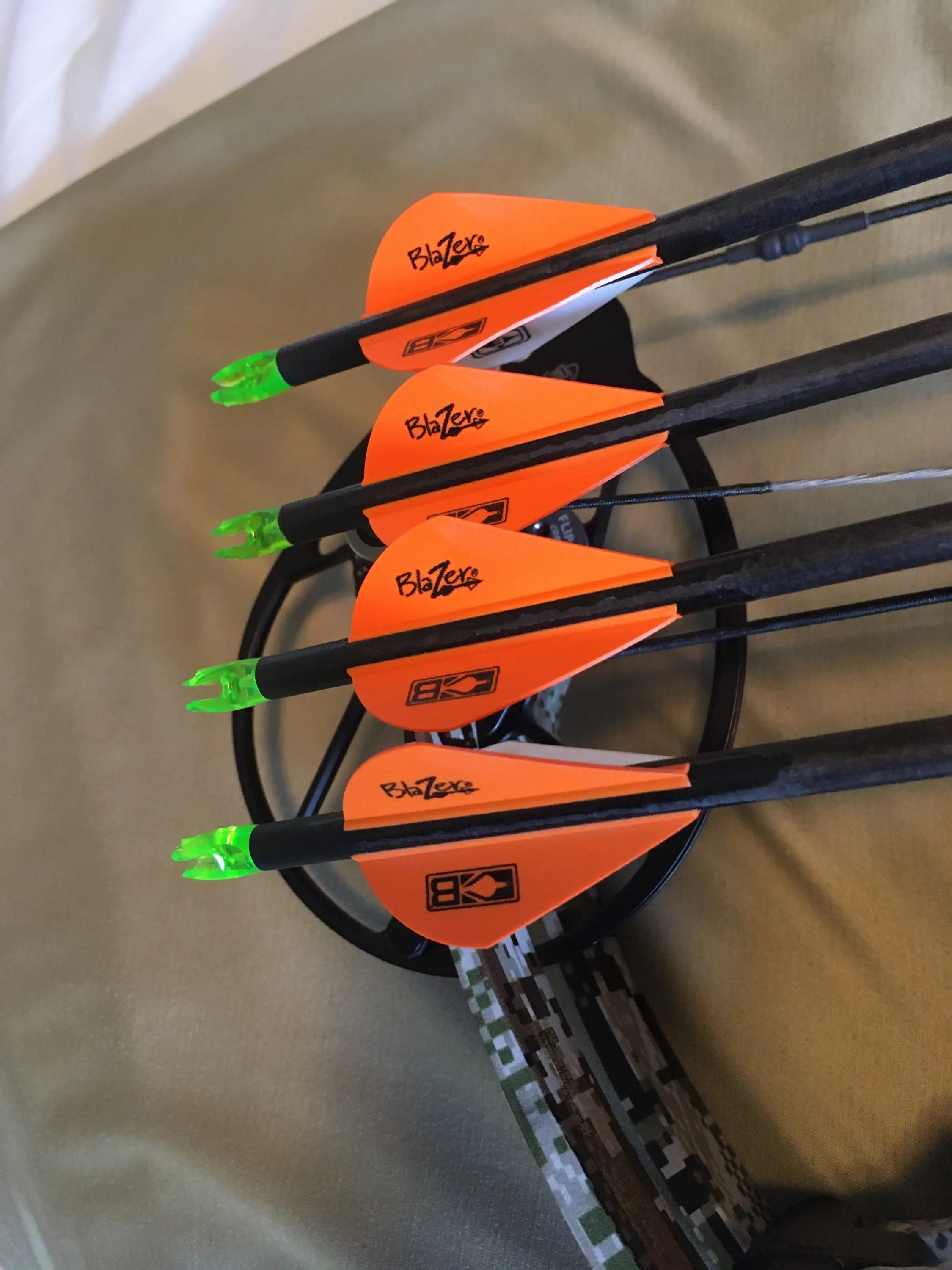
Nock ‘Em and Rock ‘Em. The North Dakota archery deer season begins at noon on Fri. Aug. 29. Hunters will continue to find lower deer densities in the state this fall. Simonson Photo.
By Nick Simonson
As southeastern North Dakota continues through the rebuilding phase for its whitetailed deer population, with considerably less firearms deer tags available for this November’s season hunters are eyeing up the approaching archery season for their opportunity to get into the field. What they’re likely to find is a population just coming out of a trough, thanks to the harsh winter of 2022-23, according to Ben Matykiewicz, Big Game Biologist for the North Dakota Game & Fish Department (NDG&F).
“It’s probably not a shock that the deer densities are still fairly low, they’re still recovering from that harsh winter we had a few years ago. But the deer coming out of winter, they should be in good condition. We had two easy winters in a row and two springs and summers of decent precipitation and good forage production -particularly this year – to help put them into good condition for the fawning and rearing season,” Matykiewicz details.
The biggest draw for North Dakota’s archery season, which starts at noon on Fri. Aug. 29, is that it provides hunters with a rare opportunity to harvest a buck in velvet. Few other states in the U.S. offer such an early start to tag a deer in this unique state, and for many in North Dakota, getting out on stand that first week for that chance is often a driving factor which overcomes swarms of summer mosquitoes, high temperatures and humidity that sometimes come with the late summer start of the bow deer season.
“Whitetail deer specifically, generally start shedding their velvet here about the middle of September. Actually, talking to one of our disease biologists here this morning, it sounds like a few people have had deer even shed velvet already within in the past few days, but I’d consider those outliers,” Matykiewicz explains, adding, “once their testosterone starts to bump up with the days shortening, they’ll shed velvet probably here in the next two weeks. So, you have about a two-week window to get something in velvet.”
Perhaps the greatest limiting factor to the whitetail deer herd’s recovery in both southeastern North Dakota and statewide is the limited amount of habitat on the landscape, especially compared to two decades ago, when hunters were afforded up to four firearms deer tags in some units along with the archery tag as well. Then, when acres enrolled in the federal Conservation Reserve Program (CRP) were at an all time high of 3.1 million, deer had ample fawning areas provided by the grass plantings, and their thermal cover and loafing areas in and around sloughs and larger tree claims were also preserved. Now, much of the same cover is limited to riparian areas and bigger sloughs which have survived drain tiling and other wetland removal projects in the region.
“I’d say the biggest challenges are just lack of high-quality habitats, specifically fawning and winter cover, so nice vegetated areas with a lot of woody cover at least 16 inches tall for fawns,” Matykiewicz states, suggesting new NDG&F programs might help turn the tide, “our PLI [private lands initiative] program started a habitat-specific program. So, similar to PLOTS, it’s more or less an easement program to get some land into nice, good-quality wildlife habitat but it’s not tied to public access,” he concludes.
The North Dakota deer archery season begins on Fri. Aug. 29 at noon and ends on Sun. Jan. 4. 2026. After opening day, hunting hours are from one half hour before sunrise to one half hour after sunset. Archery tags are $30.00 for residents and are available online at the NDG&F website at gf.nd.gov under the Buy and Apply tab, but are mailed out to hunters, and must be in a hunter’s possession during the hunt.
Simonson is the lead writer and editor of Dakota Edge Outdoors.