


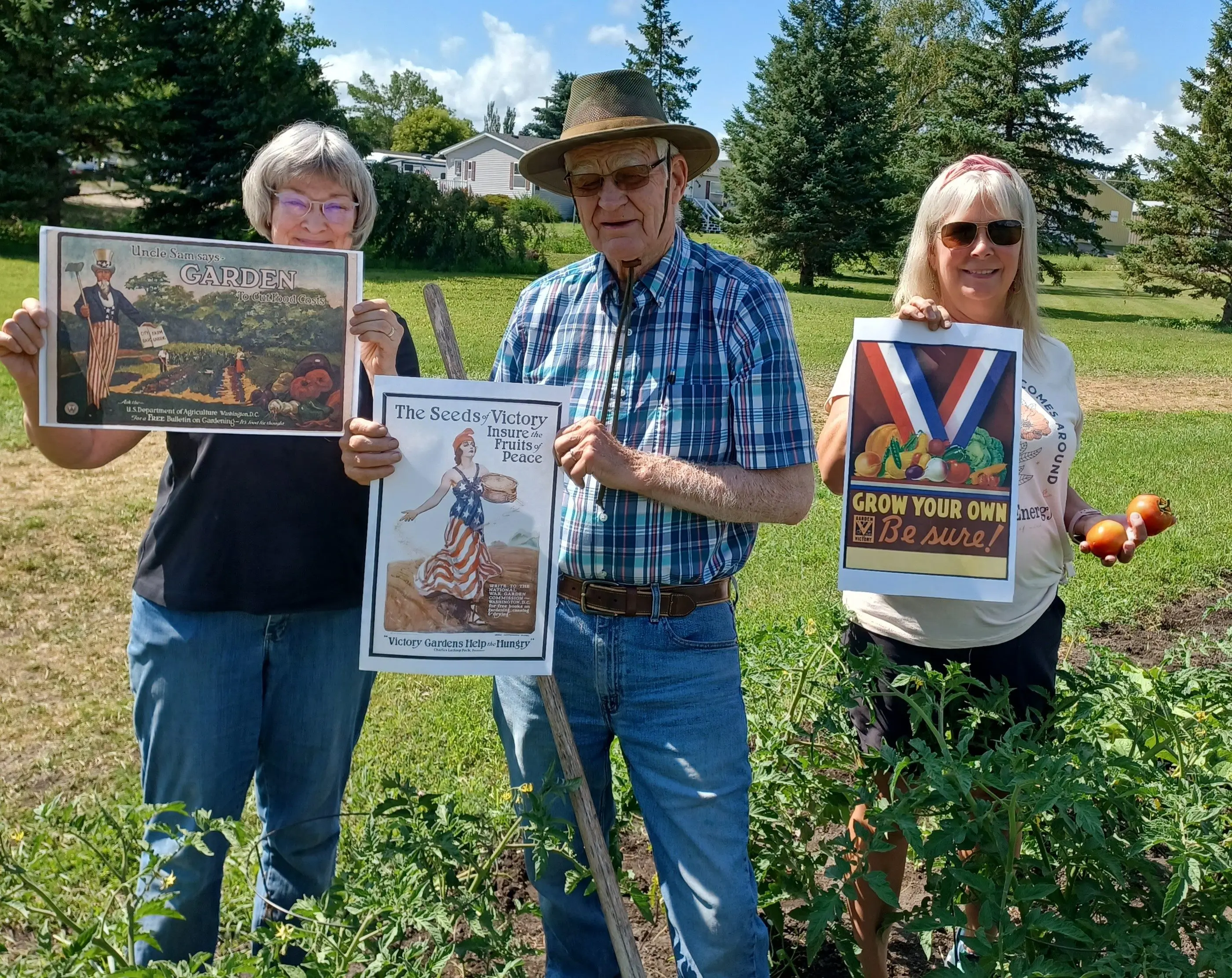
VALLEY CITY, N.D. (NewsDakota.com) – The idea of promoting civilians growing and preserving food as part of a war effort started during WWI. War Gardens provided food both for domestic and European consumption. According to the 1919 pamphlet War Gardening and Home Storage of Vegetables, the War Gardens of America produced food “which helped establish the balance of power between starvation and abundance” in Europe during the final two years of the war.
Neighborhood gardens were needed again during WWII, now named Victory Gardens, to strengthen local food consumption. The need for rationing and transportation was lessened.A government pamphlet stated:
The Victory Garden Program will:
1. Increase the production and consumption of fresh vegetables and fruits by more and better home, school, and community gardens, to the end that we become a stronger and healthier Nation.
2. Encourage the proper storage and preservation of the surplus from such gardens for distribution and use by families producing it, local school lunches, welfare agencies, and for local emergency food needs.
3. Enable families and institutions to save on the cost of vegetables and apply this saving to other necessary foods which must be purchased.
4. Provide through the medium of community gardens, an opportunity for gardening by urban dwellers and others who lack suitable home garden facilities.
5. Maintain and improve the morale and spiritual well-being of the individual, family, and Nation. The beautification of the home and community by gardening provides healthful physical exercise, recreation, definite release from war stress and strain.
— (Garden for Victory: Guide for Planning the Local Victory Garden Program 1942)
Over 142,000 gardens were reported in ND in 1944 while the nation that year as a whole produced 133,803 tons of produce.
About the feature photo: Volunteers planted a Victory Garden May 2025 to mark the designation of Valley City as the WWII Heritage City for North Dakota. Thanks to the donation of a double plot by the Community Gardens, there will be a harvest of tomatoes, beets and squash soon. The garden was planted according to a 1943 plan, designed to feed 2-4 people. Volunteers will get first crack at produce with excess going to the Senior Citizens’ Center.