


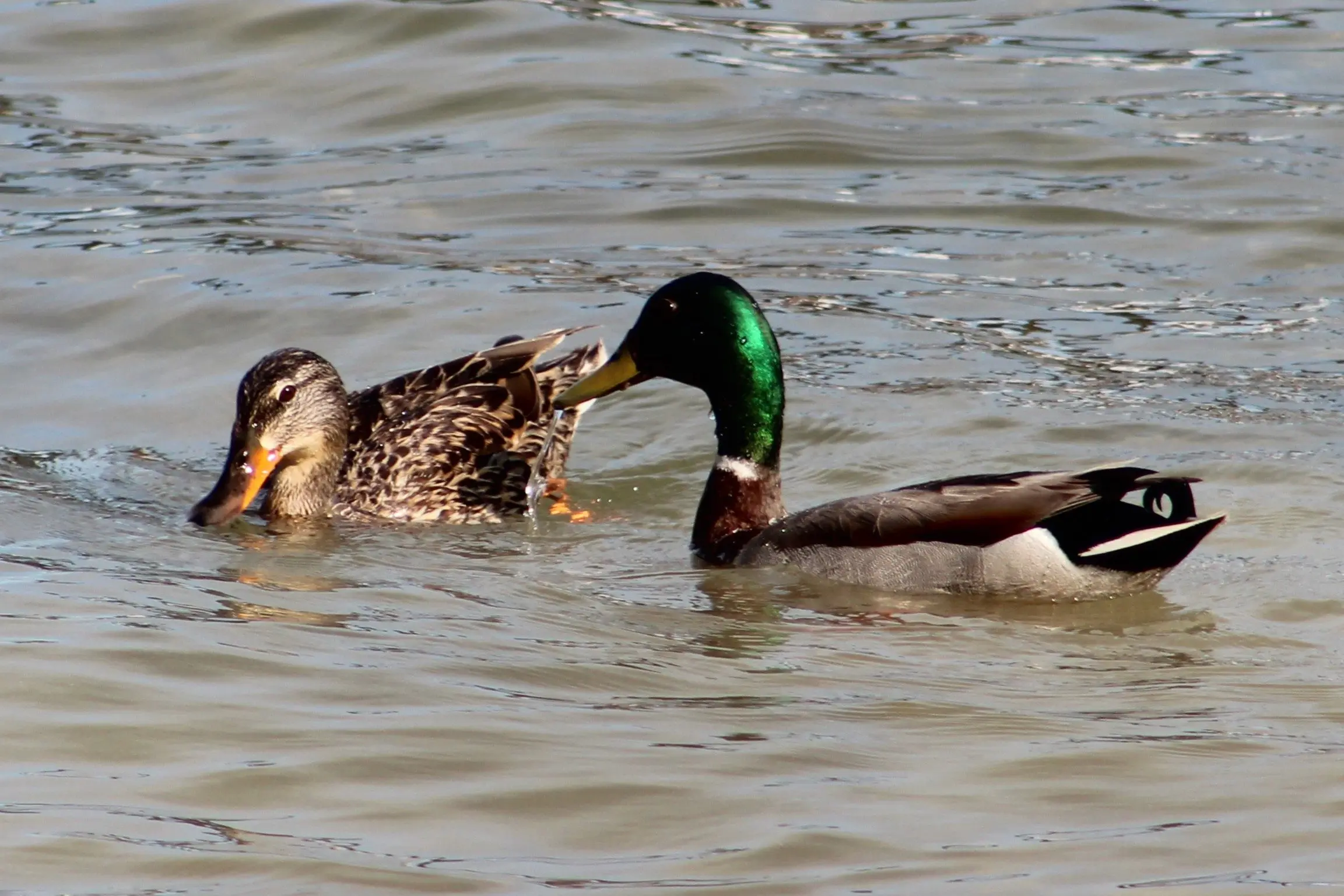
Breeding ducks found drier conditions upon their return to North Dakota in the early spring, causing many to travel further north to find better waters on which to raise their young. DEO Photo by Nick Simonson.
By Nick Simonson
Duck hunters of all stripes and generations should find numbers of waterfowl comparable to last year, with a few ups and downs in the populations of various species pursued in the fields and around the sloughs of North Dakota this fall. With next weekend’s youth and military waterfowl weekend opener set for Sat. Sep. 20, and the early resident opener the following week on Sat. Sep. 27, conditions are good for the season’s start, according to Dane Buysse, Biologist for Ducks Unlimited.
“It should be a pretty good season for hunters, similar to last year. We are four percent below the long-term average since [the surveys] started back in 1955, so it’s been going on for a long time,” Buysse explains, adding pond counts are up after a wet summer in the region, “our waters right now are better than last year heading into fall in North Dakota.”
The organization has compiled data from state, Federal, provincial and Canadian wildlife management agencies to help hunters better gauge the continent-wide number of various ducks they are likely to see during the fall migration. Overall duck numbers remained relatively steady when compared to 2024, with breeding ducks totaling an estimated 34 million in their nesting areas. Notable increases in the estimates included canvasbacks (+22 percent over 2024), redheads (+17 percent), and northern pintails (+13 percent). Declines were evident in green-winged teal (-15 percent over 2024) and scaup (-10 percent). Mallard populations remained steady at 6.55 million breeding birds, off less than a percent from 2024, however local breeding populations in North Dakota were notably down due to limited May ponds following a dry winter with limited runoff to recharge temporary wetlands the birds utilize. Many pairs opted to travel further north along the migration path to find better areas in Canada.
“We just didn’t have any of that spring runoff. There was very low snowpack here, maybe 20 inches of snow over the winter. So, there wasn’t much of that runoff to get a lot of those real early spring ponds where a lot of those ducks migrating from the south to the north stop over and select this area as where they’re going to nest. They just didn’t really see those great habitat conditions right away,” details William Palarski, Biologist with Ducks Unlimited, “the birds that did decide to nest here, I think found really good conditions later in the season,” he adds.
Youth, New Stamp in Focus
The North Dakota Game & Fish Department (NDG&F) has continued to focus on providing young hunters an opportunity to experience duck hunting in the weekend ahead of the state’s early resident waterfowl opener, letting new sportspeople get their first shot under the tutelage of a mentor. Additionally, the NDG&F has developed an online mentor program to help young, tech-savvy hunters learn more about the pastime of duck hunting via online instructional programs covering a number of waterfowl-related subjects such as habitat, preparing for the hunt and hunting over water. It’s a combination that the agency hopes will drive early success for new hunters, and as a result, increase retention, according to Cayla Bendel, NDG&F R3 Coordinator.
“On our website (gf.nd.gov) under Resources we have this Virtual Hunting Mentor that has some little modules to walk through some of the basics of hunting. So, we have a little one about where to hunt – so just some different of land ownership in the state – some basics of firearms and ammunition, and then we’ve built out dove hunting, waterfowl hunting and fall turkey hunting,” Bendel relates, adding, “so there’s everything under the waterfowl hunting one you need from what licenses you need, gear, tips, and decoy setups.”
Bendel also reminds all hunters of the new Waterfowl Habitat Restoration Electronic Stamp required for waterfowl hunting in North Dakota, designed not only to drive better funding for duck habitat production and preservation in the state, but also to help the NDG&F better understand the population of duck hunters and their preferences.
More information on duck hunting in North Dakota can be found online at gf.nd.gov/hunting/ducks. The entirety of the Ducks Unlimited 2025 Waterfowl Survey can be viewed at ducks.org/ducknumbers. The youth and military waterfowl weekend is Sep. 20 and 21, the early resident waterfowl season opener is Sep. 27 and the regular waterfowl season, which opens opportunities for non-residents in North Dakota, begins Oct. 4.
Simonson is the lead writer and editor of Dakota Edge Outdoors.