


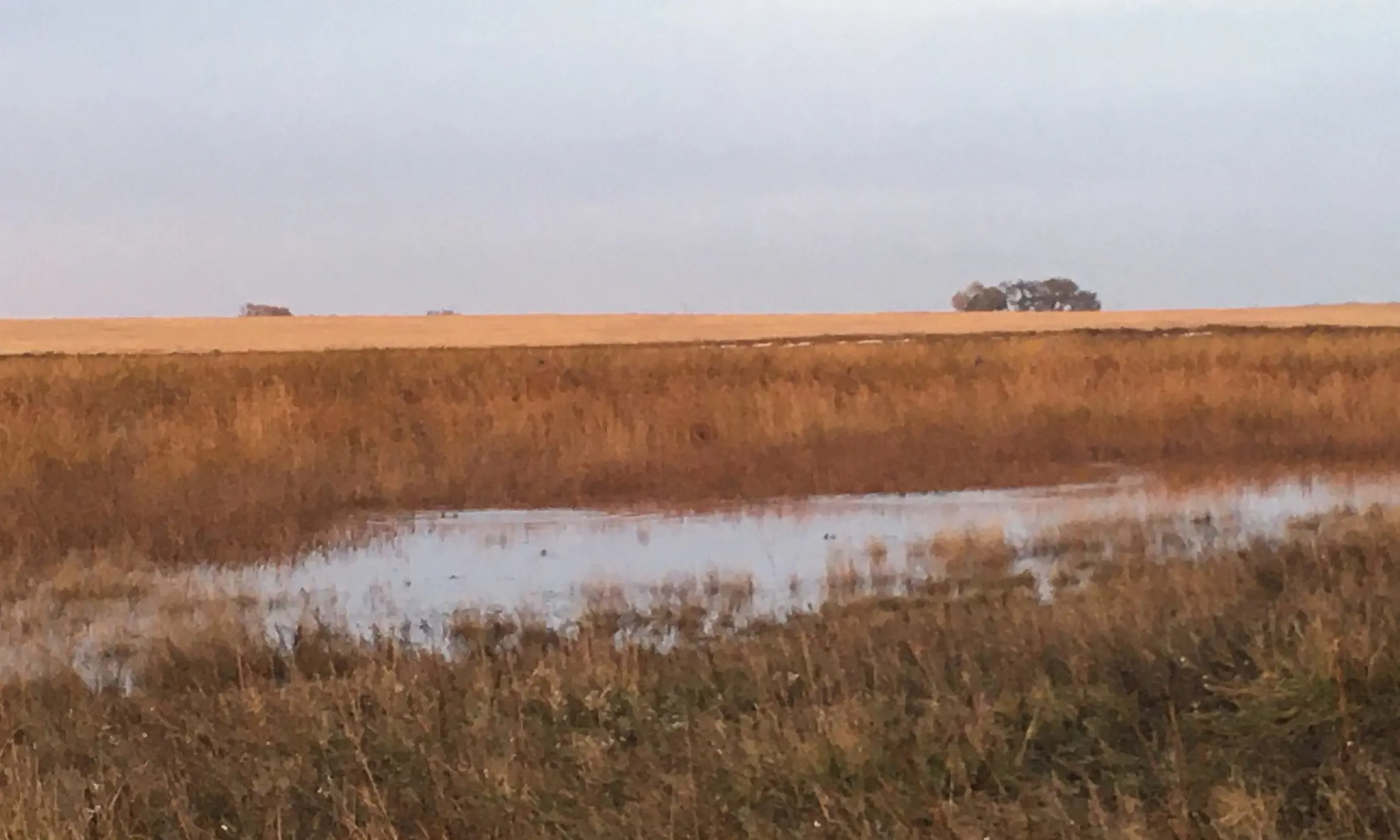
Wetlands of all kinds from temporary to permanent were recharged by recent heavy rains across North Dakota, adding extensive water hunting opportunities for those residents heading out for the state’s duck opener on Sat. Sep. 27. Simonson Photo.
By Nick Simonson
Recent heavy and prolonged rains have provided a welcome recharge for wetlands across North Dakota and a relatively warm and dry week has set the stage for the state’s resident waterfowl opener on Sat. Sep. 27. Along with the uptick in precipitation during the week of Sep. 14 through 19, hunters will likely find resident ducks spread out a bit more for the start of the season and with more locations to hunt, according to John Palarski, Migratory Game Bird Management Supervisor for the North Dakota Game and Fish Department (NDG&F).
“We are expecting a similar fall flight to last year, and that’s based off of our May breeding index that we do and also our duck brood survey that we conduct in July. As far as early migration, we’re really not expecting much of an early migration at least for our opener, just due to temperatures,” Palarski explains.
Heavy and continuous rains that dropped five to eight inches in some areas of south central North Dakota likely recharged and refilled a number of wetlands where migratory game birds rest on their journey south, just in time for the season. Also of note, a swatch of precipitation over that third week of September in eastern Barnes County dropped up to five inches in some places, helping to fill sloughs and other permanent and temporary wetlands. While this bodes well for ducks, it may create additional challenges for those who enjoy hunting over water.
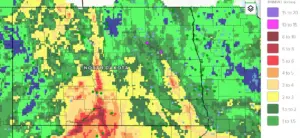
“We just finished up our fall wetland survey, and definitely in the south central part of the state we did get quite a bit of rain as well as into the central part, thinking of areas of Burleigh County, Emmons County, and even southern McLean County. The Devils Lake area also got quite a bit of rain. Ramsey County and Benson County are quite wet,” Palarski details, adding “and then the southeastern part of the state as well is pretty wet including Barnes County. That was one that stood out to us this year. Obviously, that has the ability to spread ducks out a little bit, which could be a challenge, but for those that really like to enjoy water hunting, it presents a lot more opportunity for those folks too.”
Following the recent rains, North Dakota became the only state of the lower 48 in the union to have no drought or abnormally dry conditions. This is the first time since the drought of 2017 where all of the state shows up as normal on the national drought monitor maintained by the National Drought Mitigation Center at the University of Nebraska-Lincoln. The recent rains should likely provide vegetation on the landscape with one last charge of moisture to ensure a good reserve heading into the dormant season, a factor that will help with early spring growth of nesting cover around the state’s wetlands, providing more cover for nesting ducks and brood rearing. While the risk for fire danger has dropped, hunters should still be aware of their travels as the season starts and avoid tearing up roads and other access points made softer by the recent precipitation.
The regular resident waterfowl season opens Sat. Sep. 27, and the non-resident season opens on Sat. Oct. 4; both run until Sun. Dec. 7. Information on hunting hours, species limits and more about the state’s various hunting units and their seasons for waterfowl can be found at: gf.nd.gov/hunting/ducks.