


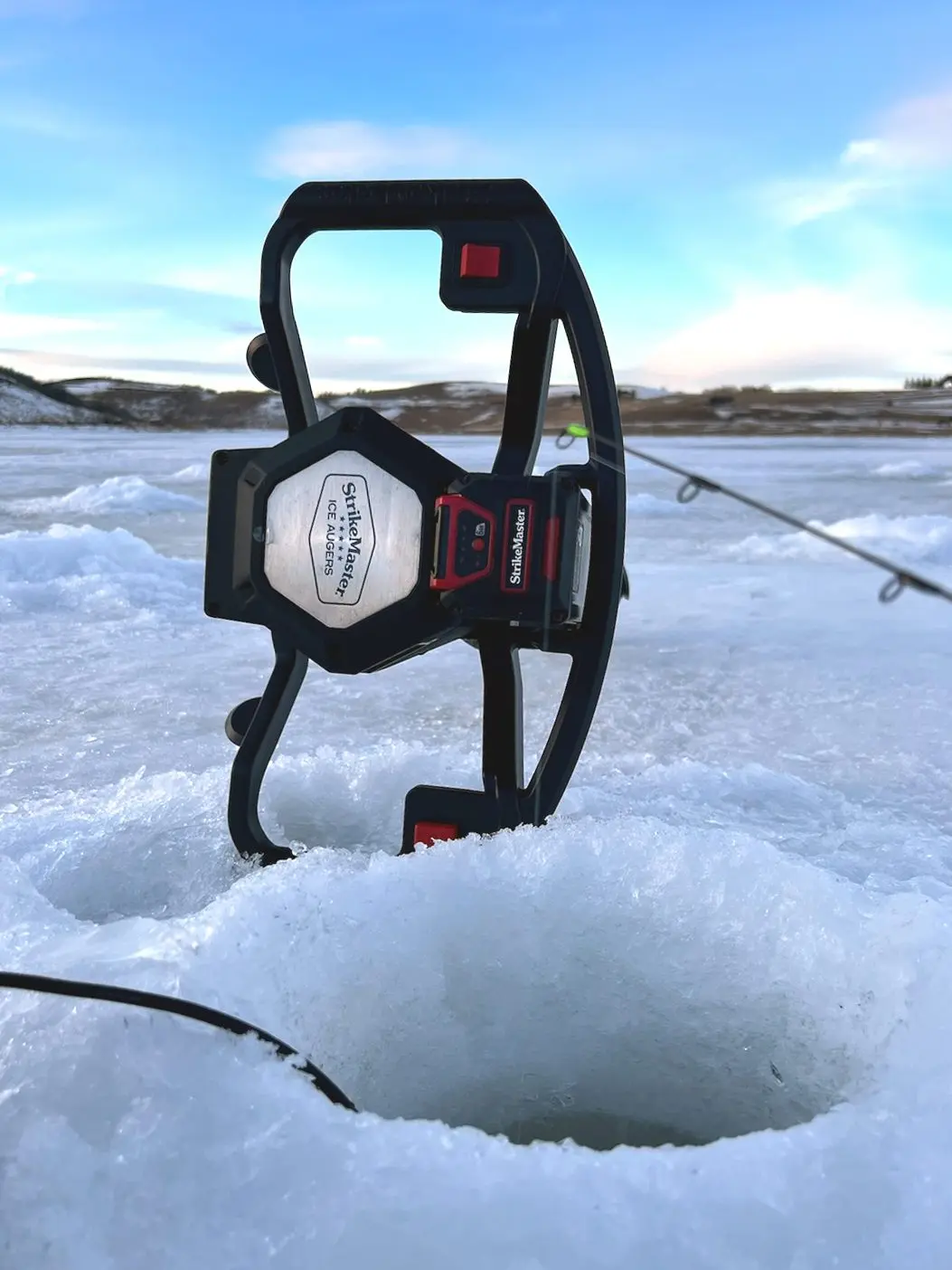
The Juice is Loose. A fully charged electric auger with sharp blades can cut dozens of holes in an outing. Make sure batteries have received time on a tender and are at max power and that sharp blades and an aligned shaft are in place for a good cut. Simonson Photo
By Nick Simonson
At no time in the ice season is an auger put to the test like mid-ice. The effort required to find fish, especially those that are willing to bite, often comes down to the number of holes that can be punched. Unfortunately, ice thickness is also at its apex this time of year and chewing through two or three feet of frozen surface can become more difficult if an auger isn’t up to the task. There are some simple tips, however, that can keep those cutters running smoothly and make each hole a bit easier this time of year.
Sharpen Up
If you’ve been hard at it each weekend across various bodies of water, then it’s likely you’ve punched dozens if not hundreds of holes in search of fish so far this winter. With that work comes added wear on an auger, and the point of contact – the blades – is the first thing to slow down hole cutting on the hardwater. Sharp blades are the key to getting good holes started and in making each hole happen a bit faster. Ensure the set of blades at the business end of your model are the sharpest they can be, either through proper honing or replacement. While you might not notice blade sharpness (or lack thereof) before you make the upgrade – you definitely will afterward in how an auger grips and rips with a sharper set in place. Your shoulders and back will thank you for the lighter workout as well.
Fully Juiced
Whether it’s an electric auger or a gas model, having a full battery and a full tank of high-quality gas makes a difference in how the unit cuts holes. For electric models, make sure batteries are fully charged and haven’t lost their ability to store energy. If you’ve had a battery for two or three seasons and it just doesn’t seem to be providing the same level, or a sustained amount of cutting power, consider replacing it if it doesn’t get the job done like it used to.
For gas models, make sure that clean, new, non-oxygenated gasoline is used. Avoid that old can of lawnmower gas in the corner of the garage and fill one up with fresh premium gasoline from the station before heading out. Use that fuel to power your auger and you’ll likely see better, faster hole cutting as a result. Consider appropriate additives like SeaFoam or other enhancers that help keep engines running better and cleaner to get the most out of every hole.
Clean Connection
Finally, check all connection points on an auger, especially at the top where the head connects to the shaft. Here, loose bolts occurring from continued use or jostling in transport can require some attention and tightening. If conditions on your local lake have required an extension be certain to check the added connection points at the ends of that additional length as well. The same is true for any bolts holding blades in place. Give those connection points a quick inspection and tighten up what you can to make sure that power transfers appropriately from the motor to the main portion and no yaw or wiggle impacts the way each cylinder gets cut in the ice.
Getting the most out of an auger requires only a few simple steps to ensure peak performance. This time of year is when they’re needed most, and when augers are not quite at their best, the process can be tedious, or at the very least, noticeable. Keep blades sharp, power sources fully charged or powered with premium fuel, and auger shafts in a straight line with firm connection points to guarantee the best possible set up to any ice fishing adventure this time of year.
Simonson is the lead writer and editor of Dakota Edge Outdoors.