


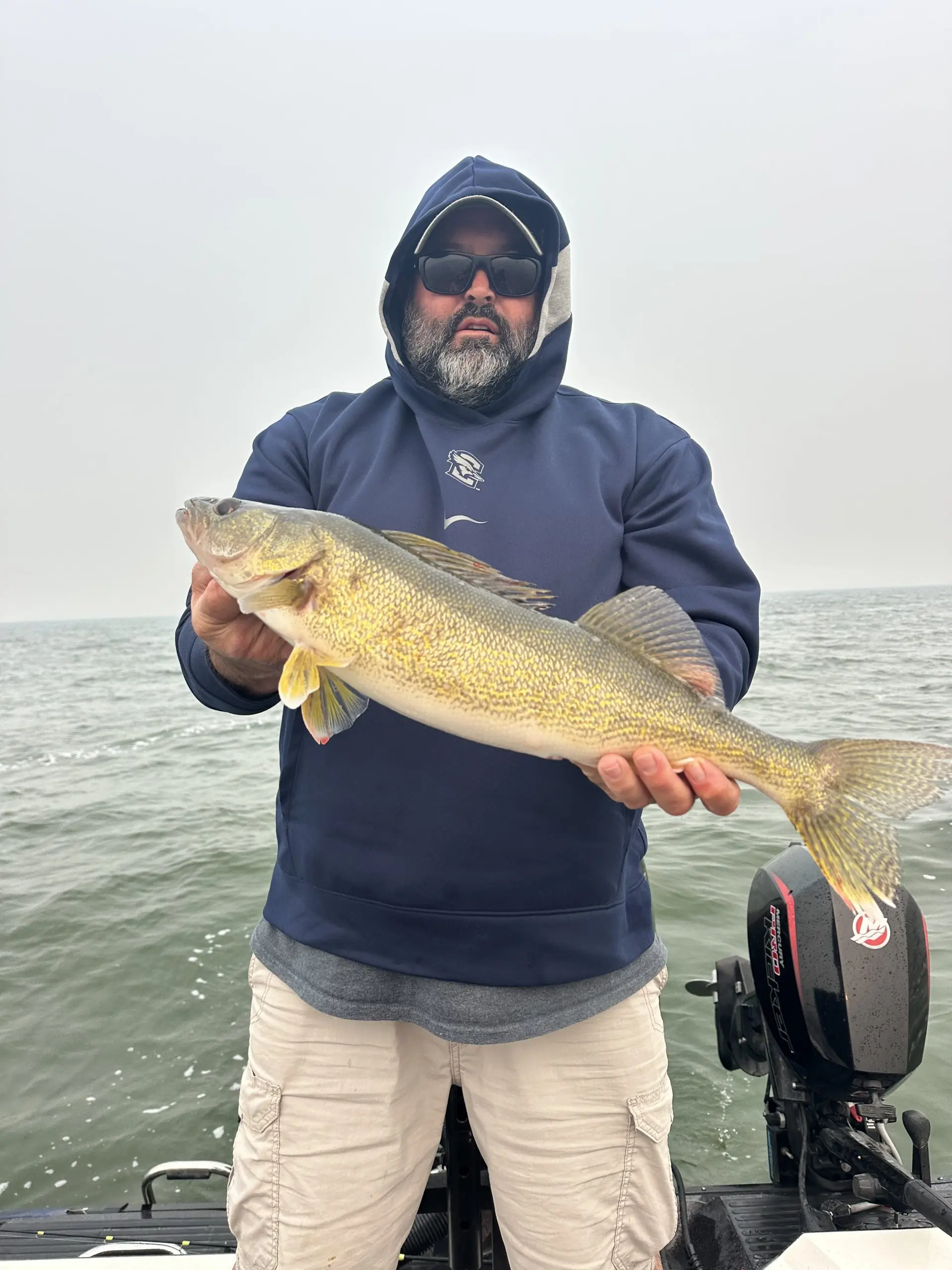
Eyeing up Devils Lake. Anglers will find good opportunities for walleyes again this openwater season on Devils Lake, with a variety of ways to fish for them on the lake. DEO Photo by Mike Peluso
By Nick Simonson
The wet years of the late 1990s, coupled with considerable drain tiling, slough removal and channeling across the landscape of northeastern North Dakota brought high water levels to Devils Lake, expanding the hypereutrophic water to more than 211,000 acres in 2011. With that rise of nearly 30 feet over two decades, the fishing for the lake’s famed jumbo perch, pike and walleyes became renowned throughout North America, as those species and their prey such as minnows and freshwater shrimp known as Gammarus, benefitted from expanded spawning spaces and structure areas of submerged brush, inundated farmsteads, sunken roads, and flooded stands of timber.
Since that time, however, the water levels of Devils Lake have remained relatively stable, with an outlet to the Sheyenne River constructed to help alleviate flooding a decade ago. With the passage of time, the productivity of the submerged acres and the standing timber has diminished, according to Mike Peluso, North Dakota fishing guide who spends approximately 60 days each summer working the water for its walleyes.
“It’s still pretty healthy, I know it got a bad rap this past winter with the perch population being down, but the walleye population is still pretty strong. It’s a changing lake, I think that’s something that’s not talked about enough. A lot of that flooded timber that we’ve seen for years, and years, and years on the lake is starting to deteriorate and the ice is starting to take it out, so there’s a lot more vegetation in the lake than there used to be. I think that’s where a lot of the fish are, and as an angler, they’re hard to catch in the weeds,” Peluso explains of Devils Lake and its walleyes.
With all that water remaining, however, anglers are still likely to find good populations of walleyes this summer, but their tactics may have to change in order to connect as the lake continues its maturation under the current conditions, and the delayed onset of spring and the cooler water temperatures of Devils Lake at this time. Those looking for walleyes should key in on structural elements and pay attention to the weather – which has been unstable and cold, delaying the ramp up of fish activity on the lake – and the water conditions as summer settles in, and clarity in the column begins to shift.
“The lake seems to be a lot cleaner with clearer water than there used to be. That plays a factor. You get a lot of boats out there with all the Livescopes buzzing around, and the fish, they take cover. So they’re just a little bit more difficult to catch at times, but overall the health of Devils Lake is extremely strong,” Peluso states, adding about the roll-out of the openwater season on the water, “the first portion is a lot of bobber fishing and if you get the right wind conditions you can do a lot of casting and just try to cover water that way. Once the water warms up and you get the first algae bloom in the lake then that’s the time to transition over to spinners with bottom bouncers to cover some ground that way. It’s a super healthy lake and you can fish it any way you want, I think that’s probably the most exciting thing about Devils Lake.”
Additionally, anglers should be aware that as of this year, there have been no detections of aquatic nuisance species on Devils Lake, including zebra mussels or spiny water flea. Those using watercraft on Devils Lake should make certain to clean, drain and dry their boats prior to launch on the water to help preserve that status and the fishery which has already gone through so many changes in the past forty years.
Simonson is the lead writer and editor of Dakota Edge Outdoors.