


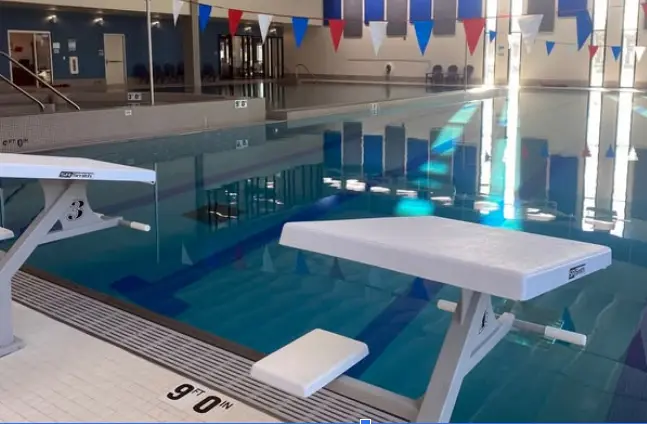
Urgent Public Health Concerns, Wellness Center Indoor Pool, Dear Members of the Park Board, February 23, 2026.
In your recent public statement affirming that “maintaining safe, clean, and well-maintained facilities is a top priority,” I feel compelled to formally document serious public health concerns I personally witnessed while employed as a lifeguard at the Wellness Center Pool.
During my employment, I observed multiple conditions that raised significant safety concerns, including:
• An HVAC system that was not functioning properly for approximately six months
• Visible mold contamination on walls and lifeguard rescue tubes
• Chlorine, pH, and alkalinity readings repeatedly outside safe operating ranges
I attempted to report these issues to Valley City Parks and Recreation Executive Director Tyler Jacobson and subsequently reported them to the Park Board. I continue to document additional examples and will provide further information as necessary.
A particularly serious incident occurred during the weekend of December 6–7, when the pool filters (filter media and skimmer basket) became plugged. As a result, water circulation stopped and the automatic chlorine feed system ceased functioning.
Pool filters are supposed to be changed every 3–6 months and every 3 months when the pool is heavily used during summer swim lessons. At the time of this incident, the filters had not been changed in approximately seven months.
By Tuesday afternoon, chlorine levels tested at 0.17 ppm — far below the minimum safe level of 1.0 ppm and well under the ideal operating range of 2.0–4.0 ppm.
By Wednesday, December 10, the water had become visibly cloudy and foul, making it difficult to see the bottom of the pool. The pool room emitted a strong, swamp-like odor. Despite these conditions, the public and the VC Sharks swim team were allowed to continue using the pool.
On Monday morning, the pool manager informed Facilities Manager Hillary Flatt that the filters were blocked and requested assistance replacing them, as the task requires two people. Ms. Flatt reportedly responded that the replacement could wait until Thursday or Friday, when she would be available to help.
By Wednesday, pool manager advised that the situation could not wait any longer. Ms. Flatt then reportedly instructed her to begin the process and stated she would assist when she was no longer busy. The filters were not fully replaced until later on Wednesday, resulting in at least three days without proper filtration and adequate chlorine input.
Without chlorine and circulation, stagnant warm water becomes an ideal breeding ground for harmful microorganisms. Rapid bacterial growth can occur within hours. Organisms of concern include E. coli, Pseudomonas, Staphylococcus, viruses, and fungi. Low or zero chlorine significantly increases the risk of gastrointestinal illness, ear infections, skin rashes, eye irritation, and, in rare cases, more serious infections. Cryptosporidiosis, caused by Cryptosporidium, is of particular concern, as it spreads easily in pools and is resistant to low chlorine levels.
A public pool is not safe to operate when chlorine levels are near zero, filtration is not running, and water has been stagnant for days. Under such conditions, the pool should have been closed immediately until filtration was restored, water chemistry returned to safe levels, the pool was properly superchlorinated, and water clarity met health department standards.
Operating the facility under these conditions constituted a serious public health risk and jeopardized the safety of employees, the public, and especially the children participating on the Sharks swim team.
Given the seriousness of these concerns, I respectfully request:
1. An immediate independent third-party inspection of the Wellness Center pool facility and mechanical systems
2. A written public report of findings and corrective actions
3. A clear plan to ensure continuous compliance with state and county public health codes
The safety of the public must remain the highest priority. Sincerely, Rory Gabel
-
Heterotrophic Plate Count: Measures overall bacteria levels and treatment effectiveness.
-
Total Coliforms: Indicates possible contamination.
-
E. coli: Signals fecal contamination and a potential health risk.
Jacobson said health officials and staff members continue to monitor the indoor pool on a daily basis and the pool remains open to their patrons.
central-valley-health-inspection-1-16-2026